Ingredients·Written 2026-08-23
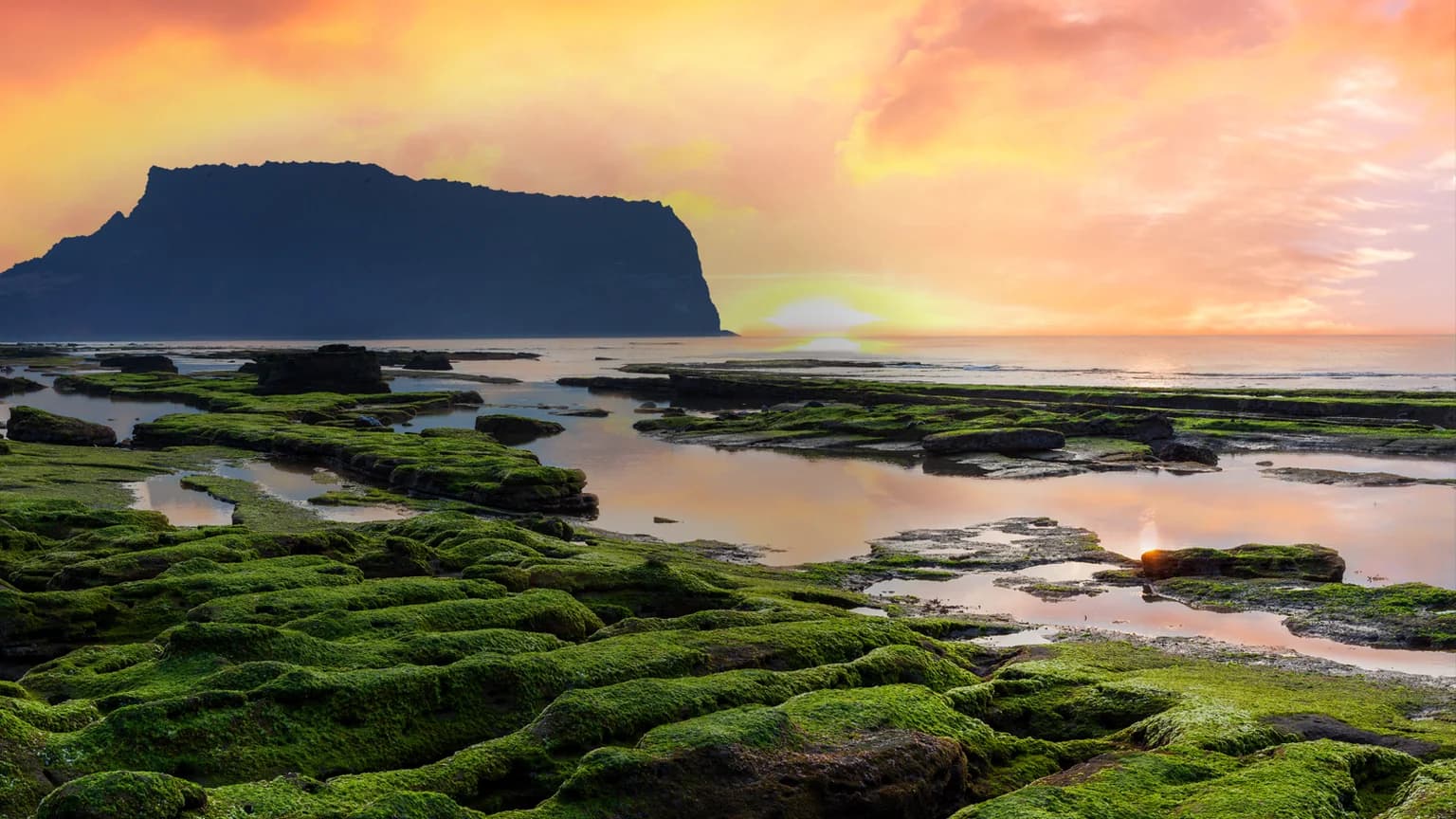
Our salt begins with lava seawater beneath Jeju
Water that starts in the sea passes through Jeju’s basalt layers and enters the ground. Our salt begins with this water. Instead of using seawater directly, we use 100% naturally filtered saline groundwater (lava seawater) as our raw material.
How is it different from seawater?
Its path and the place where it is drawn are different. Seawater from Jeju Island, a UNESCO World Natural Heritage site, is naturally filtered through basalt and seeps underground on land. This is lava seawater. The name describes how it formed.
Basalt layers have separated this water from the surface environment for tens of thousands of years. It contains naturally occurring minerals.
What does the packaging say?
The ingredient and amount declaration reads “제주용암해수 100%,” meaning 100% Jeju lava seawater. The origin is “국내산(제주도),” meaning produced in Korea (Jeju Island). The ingredient name tells you what it is made from, while the origin tells you where it comes from.
The product name is “제주미네랄솔트” (Jeju Mineral Salt), and its food category is “기타소금” (other salt). The manufacturer is our company, Jeju Mineral Salt, at 2706-32 Iljudong-ro, Gujwa-eup, Jeju-si, Jeju Special Self-Governing Province. When checking an actual product, please refer to the information on that product’s label.
Does 100% mean the mineral content?
The declaration identifies the raw material and the proportion used. It does not mean that a particular mineral makes up 100%. The composition of the raw material and the amount of each component are different information.
Lava seawater contains the minerals Zn, V and Ge. For the finished salt, we introduce calcium, sodium, potassium and magnesium. We cannot yet provide figures for the amount of each component.
If you want to know what the salt is made from, read the ingredient name on the packaging. “제주용암해수 100%,” meaning 100% Jeju lava seawater, tells you where this salt begins.